










The best outdoor toys for kids do more than just entertain: they're essential tools for physical development, mental health, social skills, and overall wellbeing. In an era when a screen is always within reach, quality outdoor toys serve a real purpose: making outdoor time so engaging that kids genuinely want it.
Regular outdoor play is associated with physical fitness, healthy immune function, vision health, sustained attention, lower anxiety, and creativity. The best outdoor toys amplify these benefits by transforming yards, parks, and playgrounds into irresistible spaces of adventure, discovery, and healthy physical activity.
This comprehensive guide identifies the absolute best outdoor toys for kids across all ages, backed by child development research, physical education expertise, and feedback from thousands of families. Whether you have a sprawling backyard or access to only public parks, we'll help you choose outdoor toys that genuinely get kids moving, exploring, and loving outdoor time.
In this guide, you'll discover:
- The top 12 categories of best outdoor toys for kids
- Age-specific outdoor toy recommendations
- Why outdoor play matters for development and health
- Best outdoor toys for different spaces (large yards, small spaces, apartments)
- Safety guidelines for outdoor play equipment
- Seasonal outdoor toy ideas
- Budget-friendly outdoor play solutions
Table of Contents
Why the Best Outdoor Toys Matter for Kids

The Case for More Time Outside
Time outside gives children things an indoor day simply cannot:
- Open space to move at a scale no living room allows
- Fresh air and natural daylight, a real change of setting from indoor hours
- Growing independence, as children learn to judge distance, speed, and their own limits
- A genuine alternative to screens, one that competes on its own terms
- Everyday physical activity that feels like play rather than exercise
What it adds up to: stronger coordination and fitness, time in natural daylight, calmer moods, attention that recovers after focused indoor tasks, and the simple pleasure of a day spent outside.
What Makes Outdoor Toys "Best"
The best outdoor toys for kids share these characteristics:
1. Promote Vigorous Physical Activity
Best toys encourage moderate-to-vigorous physical activity, the level most beneficial for cardiovascular health, fitness, and development. Think bikes, balls, climbing equipment vs. passive outdoor entertainment.
2. Are Engaging Enough to Compete With Screens
Harsh reality: outdoor toys must be genuinely exciting or kids won't choose them over tablets. The best outdoor toys feel like adventures, not exercise.
3. Scale With Development
Quality outdoor toys grow with children: a bike progresses from training wheels to tricks, sports equipment moves from beginner to competitive skills.
4. Support Multiple Types of Play
The best outdoor toys accommodate solitary play, parallel play, cooperative play, and competitive play, meeting different social needs and preferences.
5. Are Durable and Weather-Resistant
Outdoor toys face sun, rain, temperature extremes. The best are built to last multiple seasons and multiple children.
6. Encourage Sustained Engagement
Best toys keep kids outdoors for 30+ minutes at a time, not just 5-minute novelty followed by "I'm bored."
The Research-Backed Benefits
Physical Health
- Cardiovascular fitness: Active outdoor play strengthens heart and lungs
- Bone density: Weight-bearing activity builds strong bones
- Motor skills: Large-scale outdoor movement develops coordination
- Obesity prevention: Active play burns calories and establishes healthy habits
- Vitamin D production: Sunlight exposure crucial for bone health, immune function
- Vision protection: Natural light reduces myopia (nearsightedness) risk
Mental and Emotional Health
- Stress reduction: Nature exposure lowers cortisol (stress hormone)
- Attention restoration: Outdoor play improves focus and reduces mental fatigue
- Mood improvement: Physical activity releases endorphins
- Confidence building: Mastering physical challenges builds self-efficacy
- Anxiety reduction: Active play helps process and regulate emotions
Cognitive Benefits
- Creativity: Unstructured outdoor play sparks imagination
- Problem-solving: Outdoor environments present novel challenges
- Risk assessment: Evaluating physical challenges builds judgment
- Scientific thinking: Nature provides endless observation opportunities
Social Development
- Cooperation: Many outdoor toys naturally require teamwork
- Negotiation: Group outdoor play teaches conflict resolution
- Communication: Active games build verbal and nonverbal skills
- Empathy: Team sports and cooperative play develop perspective-taking
Top 12 Categories of Best Outdoor Toys for Kids
1. Bikes and Wheeled Toys (A Long-Lasting Favorite)

Why they earn their place: Bikes and wheeled toys are among the outdoor toys families get the most use out of. They provide cardiovascular exercise, build balance and coordination, foster independence, and get kids genuinely excited about outdoor time. A quality bike can provide 5-10 years of daily use.
Health benefits:
- Moderate-to-vigorous physical activity (the gold standard)
- Leg strength and cardiovascular endurance
- Balance and core stability
- Bilateral coordination
- Spatial awareness and navigation skills
Best wheeled toys by age:
Ages 18 months - 3 years: Ride-On Toys
- Push cars (feet push along ground)
- Small ride-on vehicles
- Rocking toys for outdoor use
- Skills: Leg strength, steering basics, forward/backward movement
Ages 2-5: Balance Bikes
- What they are: Pedal-less bikes propelled by feet
- Why they're superior: Children master balance first, making transition to pedal bikes seamless (often completely skip training wheels)
- Why it works: Learning balance first tends to make the move to a pedal bike straightforward
- Features to prioritize: Lightweight frame (child should lift easily), adjustable seat, air or foam tires, footrest
Ages 3-6: Tricycles
- For children ready for pedaling motion
- Low center of gravity for stability
- Wide wheelbase
- Adjustable seat for growth
Ages 4-8: Training Wheel Bikes (or skip to two-wheelers)
- Important: If child used balance bike, may not need training wheels at all
- Sizing crucial: Child should touch ground with tiptoes when seated
- Remove training wheels ASAP: Once child shows readiness
Ages 5+: Two-Wheel Bikes
- This is the long-haul purchase: Quality bike lasts years
- Proper fit essential: Stand-over height, seat adjustment, handlebar reach
- Safety gear non-negotiable: Helmet ALWAYS (properly fitted)
- Skills developed: Full cycling proficiency, independence, distance endurance, traffic awareness
Ages 5+: Scooters
- Two-wheel scooters require more balance than three-wheel
- Adjustable height handlebar (grows with child)
- Quality rear brake
- Stable, wide deck
- Benefits: Balance, pushing motion, braking, coordination
Ages 8+: Advanced Options
- Roller skates/blades
- Skateboards
- BMX bikes for tricks
- Mountain bikes for trails
Safety essentials:
- Helmet: Properly fitted (covers forehead, doesn't move when head shakes)
- Designated riding areas: Away from traffic
- Teach road safety early: Hand signals, looking both ways, yielding
- Regular equipment checks: Brakes, tires, loose parts
- Supervision: Appropriate to age and location
Why bikes are worth the investment: Unlike most toys that get outgrown or boring, bikes remain relevant for years. They provide genuine transportation, independence, and daily physical activity. A $150 bike used 200+ times per year for 5 years costs $0.15 per use, extraordinary value.
2. Sports Equipment and Balls
Why they're essential: Balls are perhaps the most versatile outdoor toys: they scale with development, facilitate social play, build fundamental sports skills, provide vigorous activity, and cost very little.
Benefits:
- Hand-eye coordination
- Gross motor skills (throwing, catching, kicking)
- Cardiovascular fitness
- Social skills (turn-taking, teamwork, sportsmanship)
- Strategic thinking
Essential ball collection:
Soccer balls:
- Kicking, dribbling, team play
- Portable goals (small, pop-up style)
- Works in any open space
- Age progression: Size 3 (under 8), Size 4 (8-12), Size 5 (13+)
Basketballs:
- Shooting, dribbling, hand-eye coordination
- Essential pairing: Adjustable basketball hoop (starts at 3-4 feet for toddlers, raises to 10 feet for teens)
- Tip: Portable hoops allow moving to driveway, yard, or storage
Footballs:
- Throwing, catching, spiral technique
- Flag football sets for safe tackling alternative
- Multiple size options (youth, intermediate, official)
Playground balls (8-10 inches):
- Versatile for multiple games
- Kickball, dodgeball, four square
- Durable rubber construction
Tennis/racquet balls:
- Smaller size, different texture
- Tennis, pickleball, catch
- Builds precision skills
Beach balls:
- Lightweight, easy for beginners
- Safe for toddlers
- Volleyball-style play
Additional sports equipment:
Ages 3-5:
- T-ball set (ball on stand, large bat)
- Oversized tennis rackets with foam balls
- Small soccer goals
- Mini basketball hoop (3-5 feet high)
Ages 6-10:
- Baseball gloves and bats
- Badminton or volleyball net
- Hockey sticks and pucks
- Lacrosse sticks
Ages 10+:
- Full sports equipment for chosen sports
- Training aids (pitching nets, rebounders)
- Competitive-level gear
Game ideas:
- Target practice: Throwing at targets builds accuracy
- H-O-R-S-E: Basketball shooting game, turn-taking
- Kickball: Baseball with kicking
- Four square: Bouncing, reflexes, strategy
- Keep away: Running, dodging, teamwork
Why balls are "best": Minimal cost, maximum versatility. A $20 ball provides years of daily use. They work alone, with siblings, with parents, with friends. They accommodate all skill levels. They're the foundation of nearly every sport.
3. Climbing Equipment and Play Structures

Why climbing is crucial: Climbing provides one of the most developmentally complete physical activities children can engage in: upper body strength, coordination, spatial awareness, motor planning, risk assessment, confidence building, all simultaneously.
Benefits:
- Physical: Upper body and grip strength, core stability, leg power, coordination
- Cognitive: Route planning, problem-solving, risk assessment, spatial reasoning
- Emotional: Confidence, courage, achievement pride, fear management
Climbing options by space:
Small spaces/apartments:
- Freestanding climbing triangles (Pikler triangles)
- Small climbing domes (4-6 feet diameter)
- Vertical climbing walls mounted to fence/wall
- Compact arch climbers
Medium backyards:
- Swing sets with climbing components
- Climbing frames with slides
- Dome climbers (6-10 feet)
- Monkey bars
- A-frame climbers with slide
Large spaces:
- Full playground systems
- Tree houses with climbing access
- Ninja warrior style obstacle courses
- Rock climbing walls (installed on structure/wall)
- Multiple connected play structures
Safety considerations (critical):
- Impact-absorbing surface: 6-12 inches of mulch, rubber tiles, engineered wood fiber, or pea gravel underneath, NEVER concrete or hard-packed dirt
- Fall zone: 6 feet clearance around all sides of equipment
- Age-appropriate height: 3-4 feet maximum for preschoolers, higher for older children
- Regular maintenance: Check for rust, loose bolts, splinters, structural stability monthly
- Proper installation: Follow manufacturer instructions precisely; consider professional installation for large structures
- Supervision: Adult supervision for young children; older children should have adult nearby
What to look for:
- Smooth, rounded edges throughout
- No pinch points or entrapment hazards
- Weather-resistant materials (rust-proof hardware, treated wood, UV-resistant plastic)
- Secure anchoring system
- Age-appropriate design
Maximizing use:
- Create challenges: "Can you climb without using your feet?"
- Time trials (for older kids)
- Obstacle courses incorporating climbing
- Pretend play integration (structure becomes castle, spaceship, mountain)
4. Water Play Equipment
Why water play is golden: Water combines sensory exploration, scientific experimentation, cooling relief on hot days, and the ability to keep children engaged for hours, literally hours, outdoors.
Benefits:
- Sustained outdoor engagement (60+ minutes typical)
- Cooling on hot days (extends comfortable outdoor time)
- Sensory input and scientific learning
- Active play (running through sprinklers, swimming)
- Social interaction (group water play)
Water play options:
Budget-friendly ($10-50):
- Sprinklers: Run through for cooling, gross motor activity
- Water table: Elevated table with reservoir for pouring, scooping, exploration
- Large storage bins: Budget water table alternative
- Water guns/squirters: Aim practice, active play, cooling
- Water balloons: Throwing, catching, sensory (watch for cleanup, latex is an environmental concern)
Mid-range ($50-200):
- Inflatable pools: Small (3-4 feet) for toddlers, medium (6-8 feet) for older kids
- Splash pads: Home versions connect to hose, provide spray features
- Slip and slides: Running start, sliding, cooling (ages 5+, proper setup essential)
- Water blob: Large water-filled mat for jumping
Major investment ($200-10,000+):
- Above-ground pools: Significant investment but years of daily use in summer
- In-ground pools: Permanent installation, highest cost, highest value for frequent users
CRITICAL SAFETY (non-negotiable):
- NEVER leave children unattended near water, not even for "just a second"
- Drowning happens in seconds, in just inches of water
- Designated "water watcher": One adult responsible, no phone, no distractions
- Empty all water containers immediately after use
- Fence pools with self-locking, self-closing gates
- Teach swimming skills as early as possible (lessons starting at 12 months)
- Learn CPR
- Life jackets for weak swimmers (Coast Guard approved, proper fit)
Extending the season:
- Solar pool heaters extend swimming season
- Pool covers retain heat overnight
- Spring/fall water play possible with warming strategies
5. Trampolines
Why kids love them: Trampolines provide intense cardiovascular exercise, build leg strength, improve balance, and are incredibly fun. Children will use them daily when available.
Benefits:
- Vigorous cardio (10 minutes = 30 minutes of jogging)
- Leg strength and power
- Balance and body control
- Vestibular (balance system) input
- Coordination
- Daily outdoor motivation
Types:
Mini trampolines (38-48 inches):
- Indoor or outdoor use
- With stability handle for younger children
- Limited bounce height (safer)
- Ages 3+
- Great for energy release
Backyard trampolines (8-15 feet):
- Ages 6+ recommended (American Academy of Pediatrics)
- MUST have safety enclosure net
- Spring padding essential
- In-ground option reduces fall height
SAFETY RULES (absolutely non-negotiable):
- ONE jumper at a time (most trampoline injuries involve more than one jumper)
- No flips or somersaults (neck injury risk)
- Adult supervision always
- Safety net properly installed and maintained
- Ladder removed when not in use (prevents unsupervised access)
- No jumping off trampoline
- Regular safety inspections (net tears, spring padding, frame stability, rust)
- Weather restrictions: No use when wet (slippery)
Important note: The American Academy of Pediatrics discourages home trampoline use due to injury risk. If you choose one, strict adherence to safety rules is essential. Consider alternatives (mini trampolines, jumping on ground) for younger children.
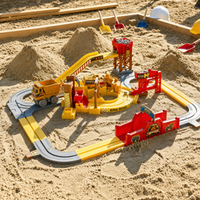
6. Sand and Dig Toys
Why sandboxes are "best": Sand play provides incredible sensory input, supports fine motor development, encourages creative construction, and keeps children engaged for 45-60+ minutes per session, which is exceptional outdoor engagement.
Benefits:
- Fine motor: Scooping, pouring, molding strengthen hand muscles
- Sensory: Rich tactile experience
- Creative: Open-ended construction
- Cognitive: Volume concepts, engineering, cause-and-effect
- Social: Cooperative building, sharing space
- Sustained engagement: Children play longer in sandboxes than most outdoor toys
Sandbox options:
- Traditional wooden sandbox: 4x4 or 6x6 feet, with lid/cover
- Plastic sandbox with lid: Compact (3x3 feet), portable, cover included
- Sand table: Elevated, less sand volume, easier for toddlers
- Portable sand containers: For apartments/small spaces
- Sand/water table combo: Dual sensory experiences
Essential sand toys:
- Shovels, rakes, scoops (variety of sizes)
- Buckets and containers (different sizes)
- Molds (castles, animals, shapes)
- Sifters and strainers
- Toy vehicles (trucks, bulldozers, diggers)
- Watering can (for damp sand construction)
Sandbox maintenance:
- Use play sand: Specifically processed for sandboxes (washed, rounded grains), NOT construction sand
- Cover when not in use: Prevents animals using as litter box, keeps out rain/debris
- Rake regularly: Aerates, allows inspection for foreign objects
- Replace sand: Every 1-2 years depending on use
- Location: Partial shade (prevents burns on hot days), visible from house
- Drainage: Slight slope or holes in bottom for water drainage
Safety:
- Check daily for debris, animal waste, foreign objects
- Supervise young children (sand eating, throwing)
- Teach "sand stays in sandbox"
- Have cleanup station nearby (brush, wipes)
7. Jump Ropes and Classic Active Play
Why classics endure: Low cost, high cardio, portable, timeless fun
- Jump ropes (cardiovascular fitness, coordination)
- Hula hoops (core strength, rhythm)
- Pogo sticks (balance, leg strength, ages 7+)
- Frisbees (throwing, catching, running)
- Kites (running, patience, wind awareness)
8. Outdoor Games and Group Activities
Social play equipment:
- Cornhole (throwing accuracy, turn-taking)
- Ladder toss
- Ring toss
- Badminton set
- Volleyball net
- Croquet (ages 6+)
9. Nature Exploration Tools
Connecting with nature:
- Magnifying glasses
- Bug catchers/viewers
- Binoculars
- Nature collection baskets
- Field guides
- Butterfly nets
10. Chalk and Outdoor Art
Creative outdoor expression:
- Sidewalk chalk (jumbo size)
- Washable outdoor paints
- Water painting (paint with water on dry surfaces)
- Outdoor easels
Activities: Hopscotch, target games, mazes, life-size portraits
11. Bubbles
Universal appeal, minimal cost:
- Traditional bottle and wand
- Giant bubble wands
- Bubble machines
- Bubble guns
Benefits: Chasing (cardio), visual tracking, breath control, hand-eye coordination
12. Gardening Tools for Kids
Long-term outdoor engagement:
- Child-sized tools (shovel, rake, hoe)
- Watering can
- Gloves
- Seeds for fast-growing plants
Best plants for kids: Radishes, beans, sunflowers, cherry tomatoes
Best Outdoor Toys by Age Group
Toddlers (1-3 years)
Focus: Gross motor, safe exploration, sensory
Best toys: Ride-ons, large balls, sandbox, water table, bubbles, push/pull toys, small slide
Preschool (3-5 years)
Focus: Active play, early sports skills, climbing
Best toys: Balance bikes, tricycles, climbing structures, sports equipment (beginner), sprinklers, chalk
Early Elementary (5-7 years)
Focus: Sports skills, coordination, group play
Best toys: Bikes, scooters, sports equipment, jump ropes, trampolines, outdoor games
Upper Elementary (8-12 years)
Focus: Sports mastery, physical challenges, independence
Best toys: Advanced bikes, competitive sports equipment, skateboarding, complex climbing, team sports gear
Explore: 🔗 Thoson outdoor toys for all ages
Best Outdoor Toys for Different Spaces

Apartment Balconies
- Miniature sandbox or sensory table
- Sidewalk chalk (on balcony floor if allowed)
- Bubbles
- Small ball play
- Container garden
- Outdoor art easel
Small Yards
- Vertical climbing (wall-mounted)
- Compact play structure
- Small sandbox or water table
- Portable basketball hoop
- Foldable goals for soccer/hockey
- Jump rope, hula hoop (require minimal space)
Medium Yards
- Swing set with climbing components
- Trampoline (10-12 feet)
- Above-ground pool
- Sports area (marked goals/bases)
- Sandbox
- Bike riding area
Large Yards
- Full playground system
- Large trampoline (14-15 feet)
- In-ground pool
- Sports court markings
- Zip line
- Separate activity zones
No Private Outdoor Space
Solution: Parks + Portable Toys
- Bring bikes/scooters to parks
- Portable: balls, frisbees, bubbles, kites, jump ropes
- Sidewalk chalk in designated areas
- Nature exploration tools on walks
Year-Round Outdoor Play Ideas
Spring
- Kites (windy season perfect)
- Gardening (planting season)
- Rain gear + puddle jumping
- Nature walks (things are blooming)
- Bikes emerge from winter storage
Summer
- Water play (pools, sprinklers, water tables)
- Early morning/evening active play (avoid heat)
- Camping equipment (backyard camping)
- All outdoor toys in peak use
Fall
- Leaf piles (jumping, raking)
- Nature collecting (leaves, acorns, pinecones)
- Cooler weather = more comfortable active play
- Outdoor games and sports
Winter
- Sleds, snow saucers, toboggans
- Snow toys (shovels, molds, fort building)
- Ice skating equipment
- Bird feeders (watch winter birds)
- Winter hiking/exploring
Outdoor Toy Safety Guidelines

Sun Protection (Critical)
- Sunscreen: SPF 30+ minimum, apply 15 minutes before, reapply every 2 hours
- Protective clothing: Lightweight long sleeves, wide-brim hats, UV-protective sunglasses
- Peak sun avoidance: Limit 10am-4pm exposure when possible
- Shade: Umbrellas, canopies, trees for breaks
Hydration
- Water accessible at all times
- Encourage drinking every 15-20 minutes during active play
- Watch for dehydration: dry mouth, dark urine, fatigue, dizziness
- Sports drinks for extended vigorous activity (1+ hours)
Supervision Requirements
- Toddlers (1-3): Within arm's reach always
- Preschool (3-5): Within sight and earshot constantly
- Elementary (5-10): Check-ins every 15-30 minutes
- Older children (10+): Clear boundaries, check-in times, know where they are
- Water play: Constant direct supervision regardless of age
Equipment Safety
- Regular inspections: Monthly checks for wear, rust, loose parts, structural integrity
- Proper installation: Follow manufacturer instructions; consider professional installation for complex equipment
- Age-appropriate use: Follow age recommendations
- Safety surfacing: Impact-absorbing material under climbing equipment
- Weather considerations: No use of certain equipment when wet (trampolines, climbing structures)
Environmental Hazards
- Daily area check: Scan for sharp objects, glass, animal waste, poisonous plants
- Insect awareness: Check for bee/wasp nests, tick prevention, mosquito control
- Stranger danger education: Age-appropriate safety rules
- Boundaries: Clear property boundaries, where not to go
Best Budget-Friendly Outdoor Toys
Quality outdoor play doesn't require expensive equipment. Some of the best outdoor toys cost under $20:
Under $10
- Sidewalk chalk (hundreds of hours of use)
- Bubbles (endless entertainment)
- Jump rope (lifetime cardio tool)
- Balls (soccer, playground balls under $15)
- Frisbees
$10-50
- Sprinklers
- Water table or large storage bin
- Sand toys collection
- Hula hoop
- Kite
- Nature exploration tools
$50-200
- Balance bikes
- Small inflatable pools
- Basketball hoop (portable)
- Small sandbox with lid
Major Investments Worth Saving For
- Quality bike: $150-300 (5-10 years of daily use)
- Climbing structure: $300-1000 (lasts through multiple children)
- Trampoline: $300-800 (daily use for years)
Free Outdoor Play
- Tag and chase games
- Hide and seek
- Nature exploration and collection
- Stick and rock play
- Puddle jumping
- Making forts from natural materials
Frequently Asked Questions
Which outdoor toy tends to get the most use?
A quality bike. It provides cardiovascular exercise, builds skills, offers transportation and independence, remains relevant for years, and motivates daily outdoor time. A $150 bike used 200+ times per year for 5 years works out to about $0.15 per use.
How much should I spend on outdoor toys?
Prioritize based on space and budget. Essential basics (balls, chalk, bubbles) cost under $50 total. Add one major investment annually if possible (bike, climbing structure, trampoline). Remember: free outdoor play (tag, nature exploration) provides equal developmental benefits to expensive equipment.
Are trampolines safe for kids?
The American Academy of Pediatrics discourages home trampolines because of the injury risk. If you choose one: ages 6+ only, ONE jumper at a time (most injuries occur with multiple jumpers), safety net mandatory, adult supervision always, no flips/somersaults. Strict rule adherence essential.
What outdoor toys work for apartments without yards?
Focus on portable toys for park use: bikes/scooters, balls, frisbees, bubbles, jump ropes, kites, nature tools. Balcony options: mini sandbox, chalk (if allowed), bubbles, small ball play. Regular park visits with portable toys provide full outdoor play experience.
How do I get my screen-addicted child outdoors?
Make outdoor time non-negotiable (30-60 minutes daily minimum). Join them initially (model enthusiasm). Invite friends (peers motivate). Provide genuinely exciting options (bikes, climbing, water play beat passive sitting). Limit screen availability, since children naturally choose outdoor play when screens aren't option. Start small, build gradually.
What outdoor toys accommodate different skill levels for siblings?
Balls, climbing structures, water play, sandboxes, and bikes (different sizes) work across ages. The best outdoor toys allow parallel play (same space, different skill levels) or cooperative play (working together). Avoid toys with only one "right" way to play. These frustrate mixed-age groups.
How do I maintain outdoor toys?
Store when possible (shed, garage, covered bins). Rinse water toys, air dry. Monthly inspections for wear, rust, loose parts. Bring cushions/fabric inside during rain. Replace worn safety equipment promptly. Proper maintenance extends life significantly, since outdoor toys face harsh conditions (sun, rain, temperature extremes).
What outdoor toys provide the most exercise?
Bikes and wheeled toys, sports equipment requiring running (soccer, basketball, football), climbing structures, trampolines, and jump ropes provide vigorous cardiovascular activity. Swimming (with pool) offers full-body workout. The best exercise comes from toys children want to use daily. Engagement matters more than theoretical calorie burn.
Final Thoughts: Investing in Outdoor Play
The best outdoor toys for kids aren't just purchases: they're investments in your child's physical health, mental wellbeing, and childhood memories. In a world dominated by screens and indoor living, quality outdoor toys provide the tools children need to move their bodies, challenge themselves physically, connect with nature, and experience the irreplaceable joy of outdoor play.
Remember these principles when choosing:
- Active over passive: Choose toys that promote vigorous movement
- Engaging over educational: If it's not fun, kids won't use it
- Durable over disposable: Quality outdoor toys last through multiple children
- Safe over risky: Appropriate safety features are non-negotiable
- Versatile over specialized: Multi-use toys offer better value
- Daily use over occasional: The best toy is the one used every day
Most importantly, remember that your participation makes outdoor play more appealing. Join your children outside, model enthusiasm for physical activity and nature, create family outdoor traditions. The memories you build playing together outdoors, teaching bike riding, playing catch, building sandcastles, will matter far more than any toy you buy.
Ready to transform outdoor time into the best part of your child's day? Explore 🔗 Thoson's collection of screen-free outdoor toys designed to get kids moving, exploring, and loving outdoor play.