











In an age where children spend more time than ever glued to screens, outdoor toys for kids have never been more important. Quality outdoor play isn't just about burning energy: it's essential for physical development, immune system strength, vitamin D production, sensory integration, risk assessment skills, and overall wellbeing. The right outdoor toys transform backyards, parks, and playgrounds into spaces of adventure, discovery, and healthy physical activity.
Research from the American Academy of Pediatrics emphasizes that outdoor play provides benefits impossible to replicate indoors: exposure to natural light, large-scale movement opportunities, connection with nature, and social interaction in open spaces. Regular outdoor play is associated with physical fitness, healthy immune function, sustained attention, and good mental health.
This comprehensive guide will help you select outdoor toys that genuinely promote active, engaging, screen-free play. From backyard essentials to portable park toys, from individual activities to group games, we've compiled expert recommendations for every age, interest, and outdoor space.
In this guide, you'll discover:
- Why outdoor play is crucial for child development
- 15 categories of the best outdoor toys for kids
- Age-appropriate outdoor toy recommendations
- How to create an outdoor play space (any size works!)
- Safety considerations for outdoor play
- Seasonal outdoor toy ideas
- Budget-friendly outdoor play solutions
Table of Contents
Why Outdoor Play Matters for Kids

Before diving into specific toy recommendations, it's crucial to understand why outdoor play, and the toys that facilitate it, matter so profoundly for child development.
The Everyday Value of Outdoor Play
An hour outside gives a child things an indoor afternoon rarely offers:
- Space for running, climbing, and full-body movement that indoor rooms cannot hold
- A natural pause from screens, with changing light, weather, and terrain to respond to
- Room for self-directed play, where children set their own challenges and their own pace
- Time that fits easily into an ordinary afternoon, in a backyard, a park, or a sidewalk
What time outdoors supports:
- Active, energetic movement that children genuinely enjoy
- Time in natural daylight, which is associated with healthy vision
- Sunlight exposure, which the body uses to make vitamin D
- Growing physical fitness and motor skills
- Calmer moods and a chance to unwind
- Attention that recovers after focused indoor tasks
- Fresh air and varied surroundings as part of a healthy routine
What Children Gain From Outdoor Play
Physical Development
Outdoor spaces allow for large-scale movement impossible indoors:
- Gross motor skills: Running, jumping, climbing, throwing, catching
- Cardiovascular fitness: Active play strengthens heart and lungs
- Strength building: Climbing, hanging, pulling develop muscle
- Balance and coordination: Uneven terrain, dynamic movement
- Bone density: Weight-bearing activity strengthens bones
- Motor planning: Navigating outdoor spaces builds body awareness
Cognitive Benefits
Outdoor play supports the way children think, notice, and pay attention:
- Attention restoration: Nature exposure improves focus and reduces mental fatigue
- Creativity boost: Open-ended outdoor play sparks imagination
- Risk assessment: Evaluating physical challenges builds judgment
- Problem-solving: Outdoor play presents constant novel challenges
- Scientific thinking: Nature provides endless opportunities for observation and experimentation
Social-Emotional Development
- Social skills: Group outdoor play teaches cooperation, negotiation, conflict resolution
- Confidence: Mastering physical challenges builds self-efficacy
- Stress reduction: Nature exposure lowers cortisol (stress hormone)
- Emotional regulation: Physical activity helps process emotions
- Independence: Outdoor exploration fosters autonomy
Health Benefits
- Vitamin D production: Sunlight exposure crucial for bone health, immune function
- Immune system strengthening: Exposure to outdoor microbes trains immune response
- Vision protection: Natural light reduces myopia risk
- Better sleep: Physical activity + natural light regulate circadian rhythms
- Reduced obesity risk: Active play burns calories, builds healthy habits
The bottom line: Outdoor toys that promote active, engaging outdoor play are everyday tools that make active, healthy play easy to reach for.
The Science-Backed Benefits of Outdoor Toys
Quality outdoor toys amplify the benefits of outdoor play by:
1. Extending Time Outdoors
When engaging outdoor toys are within easy reach, children tend to head outside more readily and stay longer. Having a few ready options removes the friction of deciding what to do.
2. Increasing Physical Activity Intensity
Outdoor toys that promote active play (bikes, balls, climbing equipment) increase moderate-to-vigorous physical activity, the level most beneficial for cardiovascular health and fitness.
3. Supporting Skill Development
Age-appropriate outdoor toys provide the "just right challenge" that builds skills progressively. A child mastering a balance bike, for example, develops balance, coordination, confidence, and risk assessment simultaneously.
4. Encouraging Social Play
Many outdoor toys naturally facilitate social interaction. Balls require partners, climbing structures accommodate multiple children, sports equipment encourages team play.
5. Connecting Children With Nature
Outdoor toys like magnifying glasses, bug catchers, and nature exploration kits foster curiosity about the natural world, building environmental awareness and scientific thinking.
15 Best Categories of Outdoor Toys for Kids
Based on developmental benefits, engagement levels, and versatility, here are the outdoor toy categories that offer the most value.
1. Bikes, Scooters, and Wheeled Toys

Why they're essential: Wheeled toys provide cardiovascular exercise, build balance and coordination, foster independence, and get kids genuinely excited about outdoor time. They are a dependable way to extend the time children spend outdoors.
Developmental benefits:
- Physical: Leg strength, cardiovascular fitness, balance, coordination, core stability
- Cognitive: Spatial awareness, speed regulation, risk assessment, route planning
- Social-emotional: Independence, confidence, pride in mastery
Best Wheeled Toys by Age:
Ages 1-3: Push and Ride-On Toys
- Push toys: Toddler pushes while walking (supports early walking)
- Ride-on toys: Feet push along ground, no pedals
- Rocking horses/animals: Balance and rhythmic movement
- Skills developed: Leg strength, steering, forward/backward movement
Ages 2-4: Balance Bikes
- What they are: Bikes without pedals; child propels with feet
- Why they're superior: Children learn balance first, making transition to pedal bikes seamless (often skip training wheels entirely)
- Look for: Lightweight frame, adjustable seat, air or foam tires, footrest
- Skills developed: Balance, steering, braking, confidence
Ages 3-5: Tricycles
- Best for: Children ready for pedaling motion
- Look for: Low center of gravity (stability), wide wheel base, adjustable seat
- Skills developed: Pedaling, steering coordination, starting/stopping
Ages 4-6: Training Wheel Bikes
- Note: Consider balance bikes first, since they often make training wheels unnecessary
- If using training wheels: Remove them as soon as child shows readiness (can balance briefly)
- Skills developed: Pedaling, balance, braking, turning
Ages 5+: Two-Wheel Bikes
- Sizing is crucial: Child should touch ground with tiptoes when seated
- Safety gear: Helmet ALWAYS, consider knee/elbow pads for beginners
- Skills developed: Full cycling proficiency, independence, distance endurance
Ages 5+: Scooters
- Two-wheel scooters: Require more balance than three-wheel versions
- Look for: Adjustable height handlebar, rear brake, stable deck
- Skills developed: Balance, pushing motion, braking, coordination
Ages 8+: Advanced Wheeled Toys
- Skateboards
- Roller skates/blades
- BMX bikes for tricks
- Electric scooters (with adult supervision)
Safety essentials for all wheeled toys:
- Properly fitted helmet (covers forehead, doesn't move when head shakes)
- Supervision appropriate to age and location
- Designated riding areas away from traffic
- Teach road safety rules early
- Regular equipment checks (brakes, tires, loose parts)
2. Balls and Sports Equipment
Why they're essential: Balls are among the most versatile outdoor toys: they scale with development, facilitate social play, build fundamental sports skills, and provide vigorous physical activity.
Ball collection for outdoor play:
- Soccer balls: Kicking, dribbling, team play
- Basketballs: Shooting, dribbling, hand-eye coordination (pair with adjustable hoop)
- Footballs: Throwing, catching, spiral technique
- Playground balls: Large rubber balls for kicking, catching, rolling games
- Tennis/racquet balls: Smaller size, different textures
- Beach balls: Lightweight, easy to hit, perfect for beginners
Sports equipment by age:
Toddlers (2-3):
- Large, soft balls for rolling and catching with whole body
- Lightweight balls that won't hurt if they hit face
- T-ball sets (bat, large ball on stand)
Preschool (4-5):
- Soccer goals (small, portable)
- Basketball hoop (adjustable height starting at 3-4 feet)
- Badminton or tennis sets (oversized racquets, soft balls)
- Football for basic throwing/catching
Elementary (6+):
- Regulation sports balls
- Full-sized basketball hoop
- Volleyball net
- Baseball gloves and equipment
- Lacrosse sticks
- Hockey equipment
Ball games that build skills:
- Target practice: Throwing at targets builds accuracy
- Keep away: Running, dodging, teamwork
- Kickball: Kicking, running, catching, cooperation
- H-O-R-S-E (basketball): Shooting accuracy, turn-taking
- Four square: Bouncing, reflexes, strategy
3. Climbing Equipment and Play Structures

Why they're valuable: Climbing builds upper body strength, coordination, spatial awareness, and risk assessment skills. It's one of the most developmentally complete physical activities children can engage in.
Climbing options for home:
Small spaces/apartments:
- Freestanding climbing triangles (Pikler triangles)
- Small climbing domes
- Vertical climbing walls mounted to fence/wall
Medium backyards:
- Swing sets with climbing components
- Climbing frames with slides
- Dome climbers
- Monkey bars
Large spaces:
- Full playground systems
- Tree houses with climbing access
- Ninja warrior style obstacle courses
- Rock climbing walls
Skills developed through climbing:
- Physical: Upper body strength, grip strength, coordination, balance, motor planning
- Cognitive: Route planning, problem-solving, risk assessment
- Social-emotional: Confidence, courage, achievement pride
Safety considerations:
- Impact-absorbing surface underneath (mulch, rubber, grass, NOT concrete)
- Age-appropriate height (3-4 feet for preschoolers, higher for older kids)
- Regular maintenance checks (stability, rust, splinters)
- Clear "fall zone" around equipment
- Adult supervision for younger children
4. Water Play Toys
Why they're magical: Water play combines sensory exploration, scientific experimentation, cooling relief on hot days, and extended outdoor time. Children will play with water for hours.
Water play options:
Small scale:
- Water table: Elevated table with reservoir; add cups, funnels, tubes, toys
- Large bins/containers: Budget-friendly water table alternative
- Sprinklers: Run through for cooling, gross motor activity
- Water guns/squirters: Aim practice, active play, cooling
Medium scale:
- Inflatable pools: Small (3-4 feet) for toddlers, larger for older kids
- Splash pads: Home versions connect to hose
- Slip and slides: Running, sliding, cooling (ages 5+)
Large scale:
- Above-ground pools: Significant investment but years of use
- In-ground pools: Permanent installation
CRITICAL SAFETY RULES:
- NEVER leave children unattended near water, not even for "just a second"
- Drowning can happen in seconds, in just inches of water
- Designate a "water watcher" adult (no phone, no distractions)
- Empty containers/pools immediately after use
- Fence pools with self-locking gates
- Teach swimming skills as early as possible
- Learn CPR
Educational water play activities:
- Floating vs. sinking experiments
- Pouring and measuring (volume concepts)
- Water wheel/gear toys (cause-and-effect)
- Ice play (states of matter)
- Color mixing with water and food coloring
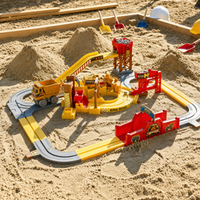
5. Sandbox and Sand Play Toys
Why sandboxes matter: Sand play provides incredible sensory input, supports fine motor development, encourages creative construction, and keeps children engaged for extended periods.
Sandbox options:
- Traditional wooden sandbox: 4x4 or 6x6 feet, with cover to keep animals out
- Plastic sandbox with lid: Compact, portable, cover included
- Sand table: Elevated, less sand, easier for toddlers
- Portable sand containers: For apartments/small spaces
Essential sand toys:
- Shovels, rakes, scoops (variety of sizes)
- Buckets and containers
- Molds (castles, animals, shapes)
- Sifters and strainers
- Toy vehicles (trucks, bulldozers)
- Watering can (for making damp sand)
Skills developed in sand play:
- Physical: Fine motor, hand strength, bilateral coordination
- Cognitive: Volume concepts, engineering, problem-solving, cause-and-effect
- Creative: Construction, imaginative scenarios
- Social: Cooperative building, sharing space and tools
Sandbox maintenance:
- Use play sand (not construction sand, too rough)
- Cover when not in use (prevents animals using as litter box)
- Rake regularly to aerate and check for debris
- Replace sand every 1-2 years
- Location: some shade, visible from house
6. Jump Ropes, Hula Hoops, and Classic Play Equipment
Why classics endure: These simple toys provide vigorous cardiovascular exercise, build coordination and rhythm, cost almost nothing, and can be used anywhere.
Jump ropes:
- Ages 5-7: Learning basic jumping (turning and jumping simultaneously is complex!)
- Ages 7+: Tricks, double dutch, rhymes
- Benefits: Cardiovascular fitness, coordination, rhythm, bone density
- Tip: Proper length is key: stand on middle, handles should reach armpits
Hula hoops:
- Ages 5+: Core strength, rhythm, persistence (takes practice!)
- Benefits: Core stability, coordination, body awareness
- Tip: Larger, heavier hoops are easier for beginners
Other classics:
- Pogo sticks: Balance, leg strength, coordination (ages 7+)
- Stilts: Balance, core strength, challenge (ages 8+)
- Frisbees: Throwing, catching, running, eye tracking
- Kites: Running, coordination, wind awareness, patience
7. Trampolines
Benefits: Trampolines provide intense cardiovascular exercise, build leg strength, improve balance, and are incredibly fun. Children will use them daily.
Types:
Mini trampolines (38-48 inches):
- Indoor or outdoor use
- With handle for younger children (ages 3+)
- Limited bounce height (safer)
- Great for energy release
Backyard trampolines (8-15 feet):
- Ages 6+ recommended
- MUST have safety enclosure net
- Pad covering springs essential
- Significant installation
SAFETY RULES (NON-NEGOTIABLE):
- ONE jumper at a time (most injuries occur with multiple jumpers)
- No flips/somersaults (neck injuries)
- Adult supervision always
- Safety net properly installed and maintained
- Ladder removed when not in use (prevents unsupervised access)
- No jumping off trampoline
- Regular safety checks (net tears, spring padding, frame stability)
Note: American Academy of Pediatrics discourages home trampoline use due to injury risk. If you choose to have one, strict safety protocols are essential.
8. Nature Exploration Tools

Why they matter: These toys transform outdoor time into scientific exploration, fostering curiosity, observation skills, and connection with nature.
Essential nature exploration tools:
- Magnifying glass: Examine leaves, bugs, rocks, textures up close
- Bug catchers/viewers: Safely observe insects, then release
- Binoculars: Bird watching, distance observation
- Nature collection bags/baskets: Gather leaves, rocks, pinecones, sticks
- Field guides: Identify plants, insects, birds, trees
- Butterfly nets: Catching (and releasing) flying insects
- Digging tools: Explore soil, look for worms, plant exploration
Nature activities:
- Scavenger hunts (find 5 different leaves, 3 rocks, something smooth, something rough)
- Nature journals (draw/describe findings)
- Rock collections
- Bug observation studies
- Bark rubbings
- Flower pressing
- Bird watching
9. Chalk and Outdoor Art Supplies
Why they're wonderful: Outdoor art provides creative expression without mess concerns, encourages large-scale movement (drawing big!), and transforms driveways and sidewalks into canvases.
Outdoor art supplies:
- Sidewalk chalk: Jumbo size easier for young hands
- Washable outdoor paints: For walls, fences, large paper
- Water painting: Paint with water on dry surfaces (no permanent marks)
- Spray bottles with water: "Paint" surfaces, cool down, water play
Chalk activities beyond drawing:
- Hopscotch: Classic game, number recognition, counting, hopping
- Target practice: Draw targets, throw beanbags/balls
- Roads and cities: For toy vehicles
- Mazes: Design and navigate
- Four square courts: Draw game boundaries
- Life-size portraits: Child lies down, trace their outline
10. Bubbles
Why bubbles are magical: Universally engaging, provide cardio (chasing!), build visual tracking, encourage outdoor time, and cost almost nothing.
Bubble options:
- Traditional bottle and wand: Classic, affordable
- Giant bubble wands: Make huge bubbles (very exciting for kids)
- Bubble machines: Continuous bubbles, great for parties
- Bubble guns: Many bubbles quickly
Skills developed:
- Visual tracking (following bubble movement)
- Gross motor (running, jumping, reaching to pop)
- Breath control (blowing bubbles)
- Hand-eye coordination (popping)
DIY bubble solution:
- 6 cups water
- 1 cup dish soap
- 1/4 cup corn syrup or glycerin (makes stronger bubbles)
- Mix gently (avoid foam), let sit for best results
11. Gardening Tools for Kids
Why gardening matters: Teaches responsibility, patience, science (plant life cycles), nutrition awareness, and provides sustained outdoor engagement over weeks/months.
Kid-sized gardening tools:
- Shovel, rake, hoe (child-sized, real tools not toys)
- Watering can (small enough to manage when full)
- Gloves (proper fit)
- Kneeling pad
- Plant markers
Best plants for kids:
- Fast-growing: Radishes (ready in 3-4 weeks), beans, sunflowers
- Easy care: Cherry tomatoes, pumpkins, zucchini
- Sensory interest: Mint, lavender, strawberries
- Visually exciting: Sunflowers, rainbow chard, purple beans
Garden projects for kids:
- Pizza garden (tomatoes, basil, peppers)
- Salad garden (lettuce, carrots, cucumbers)
- Butterfly garden (nectar plants to attract butterflies)
- Sunflower house (plant sunflowers in circle, they grow into "walls")
12. Outdoor Games and Group Activities
Why they're valuable: Teach social skills, cooperation, rule-following, sportsmanship, strategic thinking, all while providing vigorous exercise.
Classic outdoor games:
- Tag variations: Freeze tag, TV tag, flashlight tag
- Hide and seek: Counting, spatial awareness, excitement
- Red light, green light: Listening, impulse control, running
- Simon says: Following directions, impulse control
- Capture the flag: Strategy, teamwork, running (ages 7+)
- Kick the can: Hiding, running, teamwork
Equipment-based group games:
- Cornhole: Throwing accuracy, turn-taking, math (scoring)
- Ladder toss: Aim, coordination, strategy
- Ring toss: Accuracy, hand-eye coordination
- Bocce ball: Throwing, strategy, measurement
- Croquet: Aim, sequencing, strategy (ages 6+)
- Badminton: Hand-eye coordination, cooperation/competition
- Volleyball: Teamwork, coordination, communication
13. Outdoor Building and Construction
- Large cardboard boxes (forts, houses, cars)
- Outdoor building planks and crates
- Sticks and natural materials for building
- Tents and play tunnels
14. Ride-On and Push Toys for Toddlers
See detailed coverage in Category 1 (Wheeled Toys)
15. Outdoor Sensory Play
- Mud kitchen (pots, pans, utensils, water + dirt)
- Sensory tables with natural materials
- Wind chimes and spinners
- Sound-making outdoor toys
Outdoor Toys by Age Group
Toddlers (1-3 years)
Focus: Gross motor development, sensory exploration, safe risk-taking
Best toys: Push toys, ride-ons, balls (large), sandbox, water table, bubbles, sidewalk chalk
Preschool (3-5 years)
Focus: Active play, imaginative play, early sports skills, nature connection
Best toys: Balance bikes, tricycles, climbing structures, balls (variety), bubbles, nature tools, pretend outdoor play
Early Elementary (5-7 years)
Focus: Sports skills, coordination, group play, independence
Best toys: Bikes, scooters, sports equipment, jump ropes, hula hoops, group games, climbing equipment
Upper Elementary (8-12 years)
Focus: Sports mastery, physical challenges, social play, specialized interests
Best toys: Advanced bikes/scooters, sports equipment, trampolines, skateboarding, obstacle courses, group sports
Browse collection: 🔗 Thoson outdoor toys for all ages
Outdoor Play for Small Spaces
Don't have a backyard? You can still provide excellent outdoor play!
Apartment Balconies
- Miniature sandbox/water table
- Sidewalk chalk (on balcony floor)
- Bubbles
- Small ball play
- Container garden
- Outdoor art easel
Small Yards
- Vertical climbing (wall-mounted)
- Compact play structure
- Sandbox or small pool
- Portable basketball hoop
- Sidewalk chalk on patio/driveway
No Private Outdoor Space
- Parks: Bring portable toys (balls, frisbees, bubbles, kites)
- Playgrounds: Regular visits provide climbing, sliding, swinging
- Nature walks: Bring nature exploration tools
- Sidewalks: Chalk, scooters, bikes (with supervision)
Outdoor Play Safety Guidelines

Sun Protection
- Sunscreen SPF 30+ (apply 15 minutes before going out, reapply every 2 hours)
- Protective clothing (lightweight long sleeves, wide-brim hats)
- Avoid peak sun hours (10am-4pm) when possible
- Provide shade options
Hydration
- Water accessible at all times outdoors
- Encourage drinking every 20 minutes during active play
- Watch for dehydration signs (dry mouth, dark urine, fatigue)
Supervision
- Toddlers: Within arm's reach always
- Preschoolers: Within sight and earshot
- Elementary: Check-ins every 15-30 minutes
- Near water: Constant direct supervision regardless of age
Equipment Safety
- Regular checks for wear, damage, rust
- Proper installation and anchoring
- Age-appropriate use
- Impact-absorbing surfaces under climbing equipment
Environmental Hazards
- Check play area for hazards (sharp objects, glass, poisonous plants)
- Fence pools completely
- Teach stranger danger
- Insect awareness (especially bees, wasps, ticks)
Seasonal Outdoor Toy Ideas
Spring
- Kites (windy season)
- Gardening tools (planting season)
- Rain gear and puddle jumping boots
- Nature exploration (things are growing!)
Summer
- Water toys (pools, sprinklers, water tables)
- Early morning/evening active play (avoid heat)
- Camping gear (backyard camping)
- Bug catchers (insect season)
Fall
- Leaf rakes (child-sized)
- Pumpkin decorating supplies
- Nature collecting (leaves, acorns, pinecones)
- Cooler weather = more active play possible
Winter
- Sleds, snow saucers
- Snow toys (shovels, molds)
- Ice skating equipment
- Bird feeders (watch winter birds)
Frequently Asked Questions
How much time should kids spend outdoors daily?
A widely used guideline is at least 60 minutes of physical activity a day for children ages 6 and up, and outdoors is one of the easiest places to get it. Younger children do best with movement spread across the day. Aim for 1-3 hours outside when possible, weather permitting. Even 20-30 minutes is worthwhile.
What if we don't have a backyard?
Parks, playgrounds, sidewalks, and even apartment balconies can provide outdoor play opportunities. Portable outdoor toys (balls, bubbles, chalk, nature exploration tools) allow play anywhere. Regular park visits provide access to climbing equipment and open spaces.
Are expensive outdoor toys worth it?
Not necessarily. Some of the best outdoor play comes from simple, inexpensive items: balls, chalk, bubbles, jump ropes. Invest in quality for safety-critical items (bikes, helmets, climbing equipment) but remember that children often prefer simple toys that allow creative play.
What's the most important outdoor toy to buy?
If forced to choose one category: balls. They're versatile, affordable, facilitate social play, build fundamental motor skills, and provide cardio exercise. Start with a collection of different sized balls and add sports equipment as children develop skills.
How do I get my screen-addicted child to play outside?
Start small: 20 minutes daily, make it non-negotiable family time. Join them initially (model enthusiasm for outdoor play). Invite friends over (peers make outdoor play more appealing). Limit screen time, since children naturally choose outdoor play when screens aren't available. Make the outdoor space inviting with engaging toys.
Is it safe for kids to play outside alone?
Depends on age, location, and child maturity. General guidelines: Under 5: always supervised. Ages 5-7: backyard play with frequent check-ins. Ages 8-10: backyard/neighborhood play with boundaries and check-in times. Ages 10+: increasing independence with clear rules. Always assess your specific situation (traffic, neighborhood safety, child judgment).
What outdoor toys work for all ages?
Balls, bubbles, sidewalk chalk, nature exploration tools, and water play work across wide age ranges. These versatile options mean younger and older siblings can play together, maximizing toy value.
How do I maintain outdoor toys?
Store toys when not in use (shed, garage, covered containers). Rinse water toys and air dry to prevent mold. Check equipment regularly for rust, loose parts, wear. Bring cushions/fabric items inside during rain. Replace worn safety equipment (helmets, padding) promptly. Proper maintenance extends toy life significantly.
Final Thoughts: Investing in Outdoor Play
Outdoor toys for kids aren't frivolous purchases: they're investments in your child's physical health, cognitive development, and overall wellbeing. In a world dominated by screens and indoor living, quality outdoor toys provide the tools children need to connect with nature, move their bodies, challenge themselves physically, and experience the joy of outdoor play.
Remember these key principles when selecting outdoor toys:
- Active over passive: Choose toys that get kids moving
- Versatile over specialized: Toys that accommodate many play styles
- Durable over disposable: Quality outdoor toys last for years
- Safe over risky: Prioritize appropriate safety features
- Simple often beats complex: Basic toys encourage creative play
- Social over solitary: Toys that facilitate playing together
Most importantly, remember that your participation makes outdoor play more appealing to children. Join them outside, model enthusiasm for nature and physical activity, and create family outdoor time traditions. The memories you build playing together outdoors will matter far more than any toy you buy.
Ready to transform your outdoor space into a hub of active play? Explore 🔗 Thoson's collection of screen-free outdoor toys designed to get kids moving, exploring, and loving outdoor time.