











Three years old marks a magical turning point in child development. Your once-toddler is now a preschooler with exploding language skills, boundless imagination, and an insatiable curiosity about how the world works. Choosing the best toys for 3 year olds is a chance to give their cognitive, social, physical, and emotional development plenty to work with at an age when all four are moving quickly.
At age three, children are no longer just exploring through sensory play, they're building complex narratives, solving problems independently, creating elaborate pretend scenarios, and forming genuine friendships. The toys you provide now should support these emerging capabilities while challenging them to reach new developmental milestones.
This comprehensive, research-backed guide will help you select toys that genuinely matter for your 3-year-old's development. We've consulted child development research, Montessori principles, and real parent experiences to bring you the most valuable toy recommendations available.
In this guide, you'll discover:
- 15 categories of developmentally optimal toys for 3-year-olds
- Specific cognitive, physical, and social milestones at age 3
- How to recognize quality toys vs. marketing hype
- What makes 3-year-old play different from 2-year-old play
- Common toy purchasing mistakes and how to avoid them
- Building a toy collection that grows with your child
Table of Contents
The 3-Year-Old Developmental Leap: What's Different Now

Three-year-olds are not just "older toddlers", they've crossed a significant developmental threshold. Understanding these changes helps you see why certain toys are now perfect, while others that worked at age two no longer engage your child.
The Cognitive Revolution at Age 3
Your 3-year-old's brain is undergoing remarkable changes that fundamentally alter how they think and learn.
Executive Function Emerges
For the first time, you'll see genuine planning, goal-directed behavior, and impulse control (though still developing). Your child can now:
- Set and pursue goals: "I'm going to build a castle" (and actually work toward that specific goal)
- Problem-solve sequentially: Understanding that step A must happen before step B
- Remember multi-step instructions: "Go upstairs, get your shoes, and bring them to the door"
- Inhibit impulses (sometimes): Waiting for a turn, not grabbing toys from others
- Shift attention flexibly: Transitioning between activities with less distress
Toy implication: Three-year-olds can now handle toys with multiple components, games with simple rules, and activities requiring sequential steps. They're ready for genuine puzzles, basic board games, and construction toys with instructions.
Symbolic Thinking Flourishes
While symbolic play begins around age 2, it explodes at age 3. Your child now:
- Creates elaborate pretend scenarios: Not just "feeding" a doll but creating entire storylines
- Transforms objects imaginatively: A block becomes a phone, car, boat, or cake as needed
- Engages in role-play: Becoming characters (doctor, teacher, parent, superhero)
- Uses props to enhance pretend play: Appreciating realistic toy versions of real objects
- Incorporates narrative structure: Beginning, middle, and end to their pretend scenarios
Research note: Children who engage in rich pretend play tend to show stronger executive function, creativity, and theory of mind (understanding others' perspectives) in later childhood.
Categories and Classification
Three-year-olds begin understanding that objects can be grouped in multiple ways:
- Sorting by multiple attributes (color AND size simultaneously)
- Understanding class inclusion (all dogs are animals, but not all animals are dogs)
- Recognizing patterns and continuing sequences
- Making comparisons (bigger/smaller, more/fewer, same/different)
Language Explosion: From Sentences to Storytelling
The language development between ages 2 and 3 is staggering. By age three, most children:
Expressive Language Milestones:
- Vocabulary of around 1,000 words (compared to 200-300 at age 2), with a wide and perfectly normal spread between children at this age
- Complex sentences: "I want to go to the park because I like the swings"
- Correct pronoun use: I, you, he, she, they used appropriately
- Past and future tense: Understanding "yesterday" and "tomorrow"
- Asks constant questions: The famous "Why?" phase emerges
- Tells simple stories: Recounting events with narrative structure
- Sings complete songs: Memorizing and performing entire songs
Receptive Language (Understanding):
- Follows 3-4 step instructions in sequence
- Understands prepositions (in, on, under, behind, next to)
- Comprehends basic time concepts (morning, night, later, soon)
- Recognizes that the same word can have multiple meanings
- Understands simple jokes and wordplay
Best toys for language development at age 3: Open-ended toys that prompt conversation (pretend play sets, puppets, dollhouses), books with longer narratives, storytelling props, and any toy that facilitates parent-child dialogue.
Social-Emotional Development: From Parallel to Cooperative Play
This is perhaps the most visible change. Three-year-olds transition from playing near other children to playing with them.
Social Milestones at Age 3:
- Cooperative play emerges: Working together toward shared goals
- Turn-taking improves: Can wait (briefly!) for their turn
- Preference for peers: Actually seeking out other children to play with
- Beginning empathy: Recognizing and responding to others' emotions
- Friendship concepts: Having "favorite friends" and missing them
- Negotiation skills: Trading toys, making simple agreements
- Sharing (sometimes): Though still challenging, genuine sharing emerges
Emotional Regulation:
Three-year-olds show dramatic improvements in emotional control compared to the volatile "terrible twos":
- Using words to express feelings ("I'm mad!" instead of just hitting)
- Accepting comfort from caregivers more readily
- Beginning to self-soothe in minor frustrations
- Understanding that emotions are temporary ("I was sad, now I'm happy")
- Showing pride in accomplishments
Toy consideration: Three-year-olds benefit enormously from toys that facilitate social play: cooperative games, toys that require 2+ children, role-playing scenarios with multiple characters.
Physical Development: Coordination and Control
Gross Motor Achievements:
Physical capabilities expand dramatically at age three:
- Pedaling a tricycle: Finally have the coordination for this complex skill
- Running with control: Starting, stopping, and changing direction deliberately
- Climbing confidently: Navigating playground equipment independently
- Jumping from heights: Jumping off low steps or platforms
- Balancing on one foot: For 2-3 seconds
- Throwing overhand: With improving accuracy
- Catching large balls: Using arms and body (not yet hands only)
Fine Motor Refinement:
- Tripod pencil grip emerges: Holding writing tools correctly
- Cutting with scissors: Following lines, cutting out shapes
- Drawing recognizable shapes: Circles, crosses, and early attempts at squares
- Building complex structures: Towers of 9-10 blocks, bridges, walls
- Threading beads: On laces or strings
- Manipulating fasteners: Large buttons, zippers, snaps
- Using utensils proficiently: Fork and spoon with minimal spilling
Best toys for physical development: Tricycles or balance bikes, balls for throwing/catching, climbing structures, jump ropes, playground equipment, plus art supplies requiring precision (scissors, crayons, beads).
How 3-Year-Olds Play: Understanding Play Patterns
Three-year-old play looks fundamentally different from toddler play. Understanding these patterns helps you choose toys that match how your child naturally wants to engage.
Dramatic Play Dominates
Pretend play becomes the primary play mode for most 3-year-olds. They might spend an hour or more in a single pretend scenario, developing complex storylines and switching between characters.
What you'll observe:
- Extended pretend sequences (20-30+ minutes in one scenario)
- Multiple roles in succession ("Now I'm the mommy... now I'm the baby")
- Incorporating elements from their real life (doctor visits, grocery shopping, bedtime routines)
- Creating rules within their pretend world ("In this game, you have to knock first")
- Using dialogue and narration ("The dinosaur is coming! Run away!")
Why it matters: Dramatic play isn't "just playing", it's the primary mechanism through which 3-year-olds process experiences, practice social roles, develop empathy, and build language skills. The best toys for 3 year olds support and extend this crucial play pattern.
Construction and Creation
Unlike 2-year-olds who stack and knock down, 3-year-olds build with purpose. They have a vision and work to realize it.
Building play at age 3:
- Naming their creations ("This is a fire station")
- Building representations of real objects (houses with rooms, garages with cars)
- Combining different building materials (blocks with toy animals, train tracks with cities)
- Modifying and rebuilding to match their vision
- Using their constructions as props in pretend play
Mastery Through Repetition
Three-year-olds will repeat activities dozens of times, not because they're bored, but because they're perfecting skills. You'll see them:
- Completing the same puzzle repeatedly
- Reading the same book over and over
- Building the same structure multiple times
- Practicing the same physical skill (jumping, climbing)
Parenting insight: This repetition isn't meaningless, it's how children consolidate learning and build confidence. The best toys for this age allow for this repeated practice without becoming boring.
Emerging Cooperative Play
For the first time, children can genuinely play together (not just alongside each other). This includes:
- Taking turns in simple games
- Building together toward a shared goal
- Engaging in collaborative pretend play with assigned roles
- Simple rule-based games (though rules may be flexible!)
15 Best Types of Toys for 3 Year Olds
Based on the developmental milestones and play patterns we've discussed, here are the toy categories that offer the most value for 3-year-olds.
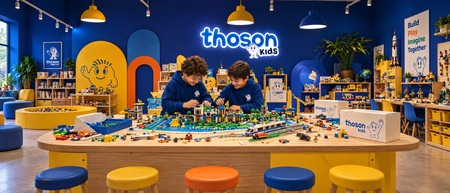
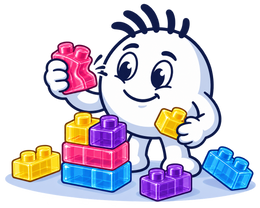
1. Advanced Building Sets and Construction Toys

Developmental benefits: Spatial reasoning, engineering thinking, problem-solving, fine motor precision, planning skills, mathematical concepts (symmetry, balance, height)
While 2-year-olds stack blocks, 3-year-olds architect. They plan structures, troubleshoot stability issues, and create representations of real buildings and objects.
Why Building Toys Are Essential for 3-Year-Olds:
Executive function practice: Building requires planning (what do I want to make?), working memory (remembering the design while building), and impulse control (not knocking it down before it's finished).
STEM foundations: Every building session teaches physics (gravity, balance, stability), mathematics (counting, patterns, symmetry), and engineering (design, problem-solving, iteration).
Persistence development: When structures fall, 3-year-olds learn to try again with modifications, a crucial life skill.
Best Building Toys for 3-Year-Olds:
Wooden blocks (graduated sizes):
- Include standard shapes plus architectural elements (arches, ramps, cylinders)
- At least 50-100 pieces for complex building
- Variety of sizes allows for scaling structures
- Recommended: 🔗 Thoson Blocks - Full Pack™ provides the variety and quantity needed for architectural play
Magnetic building tiles:
- Easy connection supports independent building success
- Transparent colors add visual interest
- 3D construction introduces volume concepts
- Can build walls, towers, and enclosed structures
- Explore: 🔗 Thoson MagTrack™ for magnetic construction with added track-building elements
Large building bricks (LEGO Duplo-style):
- Interlocking pieces create stable structures
- Can follow simple picture instructions or build freely
- Compatible pieces allow collection growth over time
- Add themed elements (people, animals, vehicles) to enhance pretend play
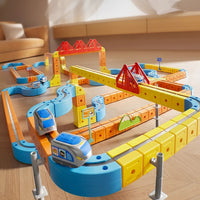
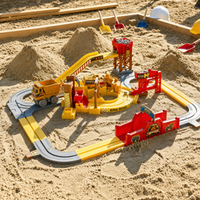
Train and track sets:
- Combines construction (laying track) with pretend play (running trains)
- Problem-solving: making tracks connect, creating loops
- Introduces concepts of routes, stations, destinations
Supporting Advanced Building Play:
- Display completed structures: Take photos before they're taken apart, validating effort
- Build together: Model more complex techniques, but let them lead
- Provide building challenges: "Can you build something taller than this book?"
- Integrate pretend play: "What happens in this building? Who lives there?"
- Combine materials: Blocks + toy cars, tracks + buildings, etc.
Storage tip: Keep building materials in open bins at child height. When children can independently access materials, they build more frequently and for longer durations.
2. Elaborate Pretend Play Sets

Developmental benefits: Imagination, narrative skills, empathy, social understanding, language development, emotional processing, theory of mind
Where building toys give cognitive development plenty to work with, pretend play toys do the same for social-emotional growth. At age 3, pretend play becomes sophisticated and extended.
Best Pretend Play Toys for 3-Year-Olds:
1. Play Kitchen with Food and Dishes:
- Mimics familiar daily routines
- Encourages nurturing play and caregiving scenarios
- Involves sorting (utensils, food types), counting (setting the table), and sequencing (cooking steps)
- Perfect for both solitary and cooperative play
- Add: Play food, pots, pans, plates, utensils, dish towels, oven mitts
- Bonus items: Empty food boxes from your pantry, play money, shopping bags
2. Dollhouse with Furniture and Figures:
- Creates entire world for narrative play
- Teaches spatial relationships (rooms, floors, furniture arrangement)
- Practices social scenarios in safe, controlled environment
- Introduces architectural concepts (rooms, walls, roofs, doors)
- Size matters: House should be sturdy and large enough for hands to manipulate figures inside
3. Doctor/Veterinarian Kit:
- Processes medical experiences (checkups, shots, being sick)
- Practices empathy and caregiving
- Learns body parts and health concepts
- Excellent for reducing medical anxiety
- Include: Stethoscope, bandages, play syringe, thermometer, medicine bottles
4. Tool Bench or Construction Set:
- Imitates adult work they observe
- Practices problem-solving ("fixing" things)
- Develops fine motor skills (turning screws, hammering)
- Introduces cause-and-effect (tightening makes it stay together)
5. Baby Dolls with Accessories:
- Practices nurturing and caregiving
- Processes feelings about being a child who needs care
- Perfect for children expecting new siblings
- Include: Bottle, blanket, clothes, stroller, bed
- Tip: Dolls with realistic weight and soft bodies are most engaging
6. Dress-Up Clothes and Costumes:
- Facilitates role-playing different identities
- Practices independence (dressing/undressing)
- Explores different social roles and occupations
- Best items: Hats, capes, vests, simple tunics, accessories (purses, tools, badges)
- Avoid: Elaborate costumes that children can't put on independently
The Power of Open-Ended Pretend Play:
Children who engage in rich pretend play tend to show:
- Stronger executive function skills
- Better emotional regulation
- More advanced theory of mind (understanding others' perspectives)
- Higher creativity scores
- More sophisticated language use
Supporting pretend play:
- Join if invited, but let them lead: Follow their rules and storylines
- Provide props but not scripts: Let them decide how to use items
- Ask questions that extend play: "What happens next?" "How does the baby feel?"
- Don't correct their fantasy: If they say the doll is hungry even though it just "ate," go with it
- Create play spaces: Dedicate an area for kitchen play, another for dolls, etc.
3. Art Materials for Creative Expression

Developmental benefits: Fine motor control, pre-writing skills, creativity, self-expression, color theory, planning and execution, emotional outlet
At age 3, art activities transition from pure sensory exploration to intentional creation. Children now plan what they want to make, even if the execution doesn't match their vision.
Essential Art Supplies for 3-Year-Olds:
1. Child-Safe Scissors:
- Specifically designed with rounded tips and easy-open springs
- Cutting teaches hand coordination, bilateral coordination (two hands working differently), and precision
- Progression: Start with play dough cutting, then paper strips, then shapes
- Tip: Teach safety rules immediately and supervise all cutting activities
2. Washable Markers (Thick and Thin Tips):
- Thick tips for large movements and filling spaces
- Thin tips for detailed drawing and emerging writing
- Vibrant colors support color recognition and mixing concepts
- Critical: Must be washable, non-washable markers are not worth the stress
3. Tempera Paint or Finger Paints:
- Allows for large movements and full-arm painting
- Teaches color mixing experientially
- Excellent sensory experience (especially finger painting)
- Setup: Large paper (18x24" minimum), paint smocks, easy cleanup area
- Tools: Various brush sizes, sponges, stamps, even toy cars for texture
4. Modeling Clay or Play Dough:
- Strengthens hand muscles essential for writing
- Three-dimensional creation teaches spatial thinking
- Can create props for pretend play
- Add: Cookie cutters, rolling pins, plastic knives, stamps, small toys to make impressions
5. Collage Materials:
- Tissue paper, construction paper, fabric scraps, ribbon, buttons
- Teaches composition and spatial arrangement
- Practices using glue (liquid or stick)
- Explores textures and materials
6. Coloring Books (Simple Designs):
- Develops color control and staying within boundaries
- Builds focus and task persistence
- Quick success builds confidence
- Choose: Large, simple designs with thick lines
- Balance: Offer blank paper for free drawing alongside coloring books
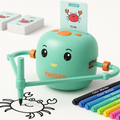
Mess-free alternative: 🔗 Magic Art - Full Pack™ provides creative expression with minimal cleanup, perfect for frequent artistic sessions.
Developmental Progression in Art at Age 3:
Early 3s (36-40 months):
- Drawing circles and crosses
- Attempting to copy vertical and horizontal lines
- Beginning to name their drawings ("This is mommy")
- Filling large spaces with color
Late 3s (40-48 months):
- Drawing recognizable people (circle head, lines for body and limbs)
- Copying squares and early triangles
- Using multiple colors deliberately
- Adding details to drawings (windows on houses, faces with features)
Creating an Art-Friendly Environment:
- Dedicated art space: Small table and chair at child height
- Accessible supplies: Materials within reach in clearly labeled bins
- Easy cleanup: Wet cloth or wipes, covered floor, art smocks
- Display area: Wall or board to showcase finished artwork
- Rotating supplies: Keep some materials out, others stored for novelty
Responding to child art: Instead of "Good job!" or "That's pretty," try:
- "Tell me about your drawing"
- "I see you used lots of blue and yellow"
- "You worked on that for a long time"
- "How did you decide where to put that?"
This approach values the process over product and encourages children to think about their creative choices.
4. Puzzles (12-48 Pieces)

Developmental benefits: Visual discrimination, spatial reasoning, problem-solving, pattern recognition, persistence, hand-eye coordination, memory
Three-year-olds are ready for genuine jigsaw puzzles, not just peg puzzles. The jump from 5-piece puzzles to 24-piece puzzles happens during this year.
Puzzle Progression for 3-Year-Olds:
Early 3s (36-42 months):
- 12-24 piece puzzles with large pieces
- Clear, distinct images with obvious boundaries
- Thick cardboard pieces easy to manipulate
- Familiar subjects (animals, vehicles, everyday objects)
Mid to Late 3s (42-48 months):
- 24-48 piece puzzles
- More complex images with less obvious section boundaries
- Beginning floor puzzles with even more pieces
- May start working on same puzzle over multiple sessions
Why Puzzles Are Exceptional for Cognitive Development:
Spatial intelligence: Research from the University of Chicago has linked regular puzzle play with stronger spatial reasoning, which is itself associated with later STEM achievement.
Executive function practice: Completing puzzles requires:
- Working memory: Remembering what the completed image should look like
- Cognitive flexibility: Trying different pieces when first choice doesn't work
- Inhibition: Not forcing pieces that don't fit
- Planning: Developing strategies (edges first, sorting by color)
Persistence and frustration tolerance: Puzzles teach children that not everything works on the first try, building resilience.
Types of Puzzles for 3-Year-Olds:
1. Traditional Jigsaw Puzzles:
- Interlocking pieces of varying shapes
- Image appears when correctly assembled
- Choose: High-contrast images, distinct sections, quality materials
2. Floor Puzzles:
- Large format (2-3 feet when complete)
- Extra-thick pieces
- Great for children who struggle with small pieces
- Can work on collaboratively with siblings or friends
3. Wooden Puzzles (More Advanced):
- More challenging than cardboard due to less obvious fit
- Extremely durable
- Often feature beautiful, detailed artwork
- Pieces stand up to frequent handling
4. Sound Puzzles:
- Make sounds when pieces are correctly placed
- Provide immediate feedback
- Teach cause-and-effect while building puzzle skills
- Topics: Animals (making appropriate sounds), vehicles, musical instruments
Supporting Puzzle Success:
- Proper difficulty level: Child should complete independently within 10-15 minutes. Too easy = boredom; too hard = frustration
-
Teach strategies explicitly:
- "Let's find all the edge pieces first"
- "Can you group pieces by color?"
- "Look for pieces that match this part of the picture"
- Provide puzzle tray or board: Keeps pieces contained, can save partially completed puzzles
- Rotate puzzles: Put away completed puzzles for a month before reintroducing
- Join without taking over: Work alongside, but let them place pieces and problem-solve
- Celebrate completion: Take photo, leave displayed briefly before disassembling
Storage tip: Use ziplock bags inside puzzle boxes to keep pieces contained. Label with piece count so you can quickly select appropriate difficulty.
5. Simple Board Games
Developmental benefits: Turn-taking, rule-following, winning/losing gracefully, counting, color recognition, strategic thinking, social skills
Three is the perfect age to introduce board games. While 2-year-olds can't follow rules consistently, 3-year-olds are ready for simple, structured games.
Best First Board Games for 3-Year-Olds:
Characteristics of good age-3 games:
- 5-15 minutes play time (attention span appropriate)
- Simple, clear rules with minimal variations
- More cooperation than competition (or non-competitive)
- Colorful, engaging pieces
- Involves some skill or choice (not 100% chance)
- Can be modified to be simpler or more complex
Game types perfect for age 3:
1. Color/Shape Matching Games:
- Draw a card, move to that color
- Match cards by color, shape, or pattern
- Lotto/bingo games with pictures
- Skills: Recognition, matching, turn-taking
2. Simple Path Games:
- Roll die or spin spinner, move that many spaces
- First to finish wins (or everyone finishes together)
- Clear beginning and end
- Skills: Counting, number recognition, patience
3. Memory Games:
- Flip two cards, find matches
- Simplified versions with 8-12 pairs (not 24+)
- Pictures that are clearly distinct
- Skills: Visual memory, attention, turn-taking
- Note: Young children often beat adults at memory games!
4. Cooperative Games:
- Players work together against the game/clock
- Everyone wins or loses together
- Reduces competitive stress
- Teaches collaboration and teamwork
- Example themes: Animals returning home, building something together, solving a puzzle collectively
The Social-Emotional Value of Board Games:
Board games are uniquely positioned to teach social skills that are hard to practice elsewhere:
- Turn-taking: Waiting while others play
- Rule-following: Everyone follows same rules
- Fair play: No cheating, no changing rules mid-game
- Winning graciously: Not gloating or teasing
- Losing with grace: Managing disappointment, congratulating winner
- Flexible thinking: Game doesn't always go as hoped
Teaching Board Game Skills:
- Play cooperatively first: Before competitive games, play together against the game
- Model good sportsmanship: "You won! Great job!" even when you lose
- Accept emotional reactions: Losing is hard; validate feelings while maintaining rules
- Keep it light: If meltdown is imminent, stop the game. "We can try again tomorrow"
- Let them win sometimes (but not always): Balance building confidence with learning to cope with losing
- Praise specific behaviors: "You waited so patiently for your turn!"
Family game night: Establishing regular game time (even 15 minutes) builds family connection, routine, and makes game-playing a normal, enjoyable part of life.
6. Ride-On Toys and Active Play Equipment

Developmental benefits: Gross motor coordination, balance, leg strength, confidence, risk assessment, spatial awareness, independence
Three-year-olds have the physical coordination for more complex ride-on toys. The pedaling motion that eluded them at age 2 now becomes achievable.
Best ride-on toys for age 3:
- Tricycles: Can now pedal independently, steer intentionally
- Balance bikes: Build confidence for eventual pedal bikes
- Scooters (wide base): Three-wheel scooters with push motion
7. Musical Instruments
Developmental benefits: Rhythm, auditory processing, creative expression, pattern recognition, emotional outlet
Three-year-olds can create intentional music rather than just noise. They enjoy singing, dancing, and making music with instruments.
Best instruments:
- Xylophones and glockenspiels
- Drums and percussion
- Simple keyboards
- Rhythm instruments (shakers, tambourines)
- Child-sized ukuleles or guitars
8. Science and Discovery Toys

Developmental benefits: Scientific thinking, observation skills, cause-and-effect, curiosity, question-asking
Three-year-olds are natural scientists, constantly asking "Why?" and testing hypotheses.
Perfect science toys:
- Magnifying glasses: Examine leaves, bugs, textures up close
- Bug viewers: Safely observe insects then release
- Simple microscopes: 🔗 Thoson MicroScope Explorer™ introduces magnification concepts
- Magnetic experiments: Explore what sticks and what doesn't
- Simple machines toys: Ramps, pulleys, gears
9. Books (Chapter Books and Complex Stories)
Developmental benefits: Language, listening comprehension, attention span, imagination, literacy foundations
Three-year-olds can now follow longer stories with more complex plots.
Book characteristics for age 3:
- Longer narratives (not just description books)
- Books with chapters (very short ones)
- Beginning to explore emotions through stories
- Can handle stories that take 10-15 minutes to read
10. Sensory and Manipulative Toys
Developmental benefits: Fine motor skills, tactile exploration, focus, creativity
Age-appropriate sensory play:
- Play dough with tools and accessories
- Kinetic sand with molds and vehicles
- 🔗 Thoson Magic Gel™ for mess-free sensory exploration
- Beads for threading and pattern-making
- Lacing cards
11. Outdoor Exploration Toys
Best for age 3:
- Sandbox with tools
- Water tables with scoops and funnels
- Bubbles and bubble machines
- Balls for throwing, kicking, catching
- Sidewalk chalk
12. Counting and Number Toys
Math foundations through play:
- Counting bears or manipulatives
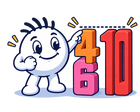
- 🔗 Count Crew - Full Pack™ for number recognition
- Number puzzles
- Simple addition/subtraction toys
13. Letter and Word Toys
Literacy preparation:
- Magnetic letters
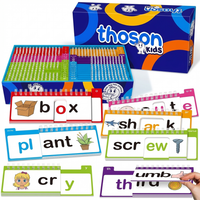
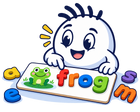
- 🔗 Spell & Play - Full Pack™ for letter recognition and early spelling
- Alphabet puzzles
- Letter matching games
14. Dress-Up and Costumes
Role-playing essentials:
- Career costumes (firefighter, doctor, chef)
- Character capes and masks
- Accessories (hats, jewelry, bags)
- Mirrors for seeing themselves in costume
15. Puppets and Storytelling Props
Narrative development:
- Hand puppets of various characters
- Finger puppets
- Puppet theater
- Props for retelling favorite stories
Red Flags: Toys to Avoid for 3-Year-Olds

1. Toys with Small Parts
Still a choking hazard. Follow the "toilet paper tube test": if it fits through, it's too small.
2. Overly Electronic Toys
Toys that do everything FOR the child limit creativity and problem-solving. Choose toys that require the child's imagination and participation.
3. Toys That Are Too Advanced
100-piece puzzles, complex building sets with tiny pieces, games with elaborate rules: these lead to frustration, not learning.
4. Single-Use Toys
Toys that can only be used one way or have one function quickly bore 3-year-olds. Choose open-ended toys with multiple play possibilities.
5. Cheaply Made Toys
They break quickly, can create safety hazards, and teach children that things are disposable. Invest in quality.
Creating the Perfect Toy Balance for Your 3-Year-Old
Balancing Open-Ended and Structured Toys
Lean toward open-ended toys (blocks, art supplies, pretend play), with a smaller number of structured toys (puzzles, games) alongside them. Both kinds earn their place, and the mix that works depends on your child.
Toy Rotation Strategy
- Keep 15-20 toys accessible
- Store remaining toys out of sight
- Rotate every 2-3 weeks
- "New" old toys are exciting again
- Less clutter, more focus
Essential Categories to Cover
- Building/Construction: 2-3 different types
- Pretend Play: 2-3 themed sets
- Art Supplies: Always accessible
- Puzzles: 3-5 at varying difficulty
- Active Play: Indoor and outdoor options
- Books: 15-20 accessible, more in rotation
- Games: 2-3 age-appropriate options
Shop curated collection: 🔗 Browse Thoson's educational toy collection designed specifically for developmental stages.
Frequently Asked Questions
What's the difference between toys for 2-year-olds and 3-year-olds?
Three-year-olds have longer attention spans, better fine motor control, can follow rules, engage in complex pretend play, and are ready for genuine puzzles and games. Toys for 3-year-olds should be more complex, offer more challenges, and support emerging social play.
How many toys should a 3-year-old have?
Quality and variety matter more than quantity. Aim for 15-20 toys accessible at once, with more in rotation. Ensure diversity across categories: building, pretend play, art, puzzles, active play, books.
Are educational toys better than regular toys?
All play is educational when it's hands-on, open-ended, and child-directed. "Educational toys" marketed with learning claims aren't necessarily better than simple blocks, art supplies, or pretend play items. Focus on toys that encourage active engagement, creativity, and problem-solving.
When should I introduce board games?
Age 3 is perfect for first board games. Start with cooperative games (everyone wins together) and simple games with minimal rules. Keep sessions short (10-15 minutes) and be patient with rule-following and turn-taking: these skills take time to develop.
Should I buy gender-specific toys?
No. Research shows that limiting toys by gender limits developmental opportunities. Boys benefit from nurturing play with dolls and kitchen sets; girls benefit from construction and active play. Offer diverse toys and let your child's interests guide their choices.
My 3-year-old plays with the same toy over and over. What does that mean?
Sustained interest in one activity shows focus and deep engagement, both positive! However, gently introduce new toys and activities to broaden skills. Some children have intense interests (trains, dinosaurs) that dominate play for months, which is developmentally normal.
Are electronic learning toys worth it?
Research suggests traditional toys offer more developmental benefit than electronic toys. A 2015 study in JAMA Pediatrics, run with infants aged 10 to 16 months, found that electronic toys reduced parent-child language quality and quantity during play. Reserve electronics for occasional use; prioritize hands-on, traditional toys for daily play.
What if my 3-year-old won't play independently?
Independent play is a skill that develops gradually. Start with 5-10 minutes while you're nearby, using open-ended toys (blocks, dolls, art). Stay available but resist jumping in to "help" or direct their play. Gradually extend independent play time as their focus and confidence grow.
Final Thoughts: Supporting Your 3-Year-Old's Development Through Play

Three years old is a spectacular age: your child is becoming more independent, more verbal, more social, and more capable every day. The toys you choose now support this remarkable growth across all developmental domains.
Remember these key principles when selecting the best toys for 3 year olds:
- Open-ended beats single-purpose: Blocks, art supplies, and pretend play items offer endless possibilities
- Process over product: The learning happens in the doing, not the final result
- Hands-on beats passive: Toys requiring active participation build more skills than toys that entertain passively
- Quality over quantity: A few excellent toys beat a houseful of mediocre ones
- Follow developmental stages: Toys should challenge without frustrating
- Balance is essential: Active, creative, cognitive, and social play all matter
Most importantly, remember that you are your child's best playmate and teacher. The best toys facilitate connection: building blocks together, reading books snuggled close, creating art side-by-side, or pretending to cook meals in a play kitchen. These shared moments of play create bonds that last far longer than any toy.
Ready to build a thoughtfully curated toy collection for your 3-year-old? Explore 🔗 Thoson's educational toy collection, designed with developmental stages, Montessori principles, and screen-free learning in mind.
Your investment in quality play materials now pays dividends in your child's cognitive, social, emotional, and physical development for years to come. Choose wisely, play often, and enjoy this magical age of growth and discovery.
Toys That Build Social Skills
Three is when parallel play transitions to cooperative play. These toys specifically support social development:
Facilitating social play: